Permission to Pivot
Apr 28, 2026There comes a moment in many transitions when a quiet question surfaces:
What if I chose differently now?
For many of us, that question feels risky. We’ve invested time, energy, and credibility. We’ve built identities around being consistent, committed, and reliable. Pivoting can feel like failure, or worse, like betraying the version of ourselves who worked so hard to get here.
So we stay. Not because it still fits, but because leaving feels irresponsible.
I’ve had to give myself this permission, too. Permission to change direction without deciding that my earlier choices were wrong.
But growth doesn’t always move in straight lines. As we change, our paths sometimes need to change with us.
Developmental psychology reminds us that healthy growth often involves revising our commitments as we gain new perspectives. We don’t abandon what came before; we integrate it. What once made sense was true then. What feels misaligned now is information, not indictment.
The fear is often framed as: If I pivot, everything I’ve done will be wasted.
But the cost of staying misaligned is rarely neutral. It shows up quietly, as fatigue, diminished curiosity, or a subtle disconnection from ourselves.
Pivoting doesn’t require dramatic exits or impulsive decisions. More often, it begins as a small act of honesty — acknowledging that something no longer fits the way it once did.
It might look like:
- choosing a different emphasis, not a different identity
- loosening a role rather than abandoning it
- experimenting quietly before deciding publicly
A pivot is not a rejection of your past.
It’s a response to your present.
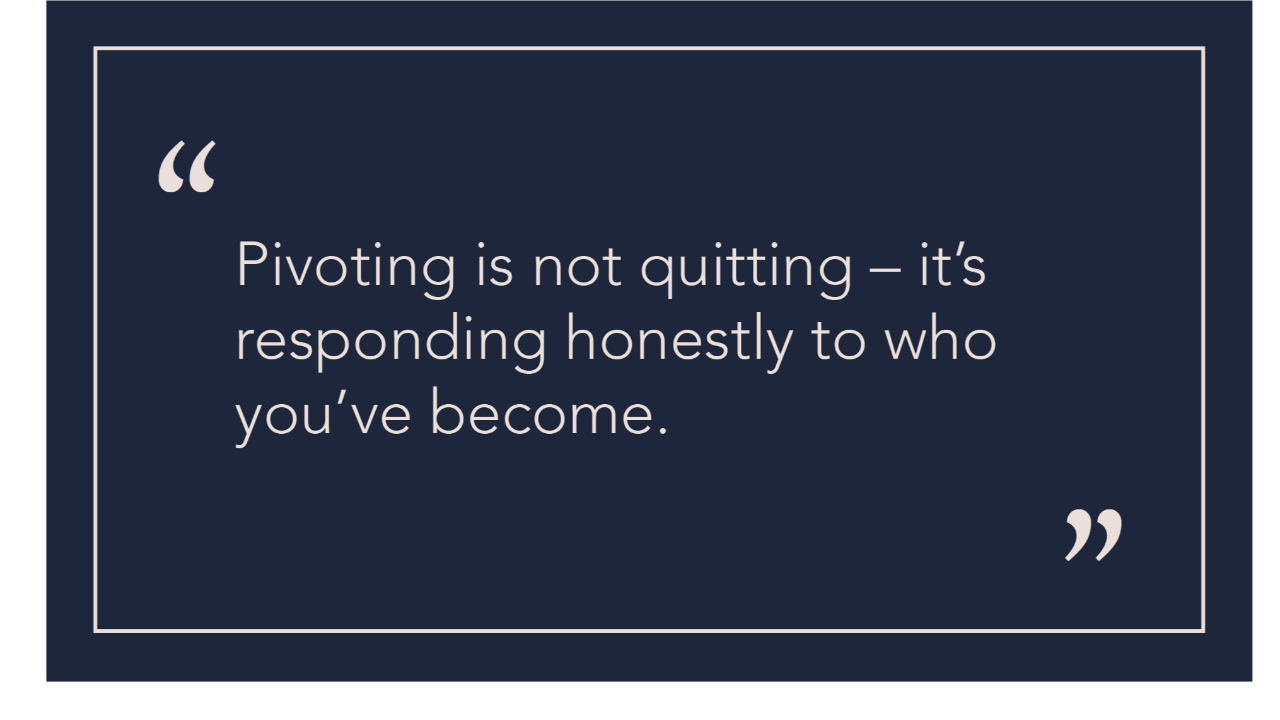
Permission to pivot is permission to honor who you’ve become — not just who you’ve been committed to being.
You don’t need certainty to begin.
You need honesty — offered gently, and taken one step at a time.
Reflection prompt
Where might you be staying out of loyalty to a past version of yourself — and what small pivot could help you respond more honestly to who you are now?