
The Quiet Work of Resilience
May 19, 2026Resilience is often described as the ability to bounce back.
To push through. To stay strong. To keep going.
And to be fair, resilient people do keep going.
They do recover.
They do find their footing again.
But most people I work with aren’t struggling because they lack perseverance.
They’re struggling because they’ve been persevering for a very long time.
They’ve adapted. They’ve coped. They’ve carried more than they ever expected to.
What they’re actually longing for isn’t more grit.
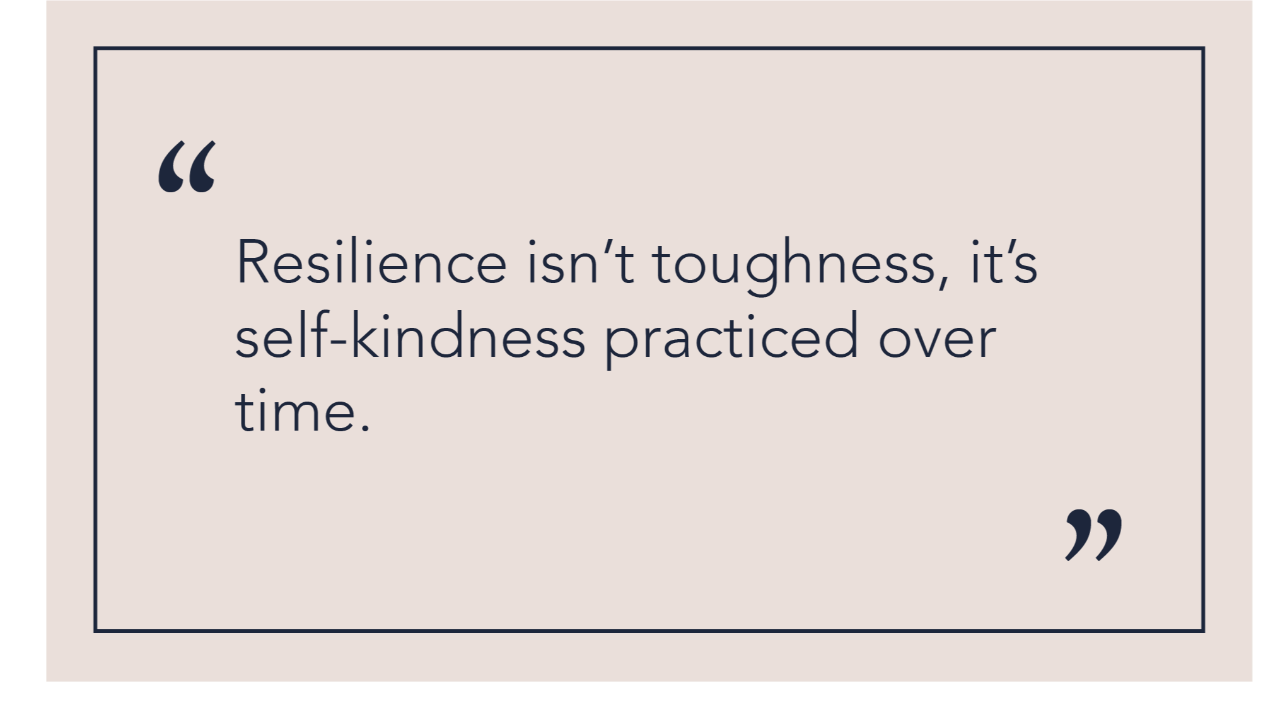
It’s permission to be kinder to themselves.
In real life, resilience rarely looks dramatic. It doesn’t announce itself. It doesn’t feel heroic.
It looks like:
- getting up after a hard day and doing one small kind thing for yourself
- naming that something is heavy instead of pretending it isn’t
- choosing rest before collapse
- staying in relationship with yourself when you’d rather check out
This is the quiet work of resilience.
Not the absence of effort. Not the absence of perseverance.
But effort paired with care.
Psychological research increasingly frames resilience as a dynamic process rather than a fixed trait. It grows through ordinary, everyday systems: supportive relationships, self-regulation, meaning making, and access to help when needed.
In other words, resilience isn’t something you summon in isolation. It’s something that develops in context.
This matters because burnout is often treated as a personal failing when, in reality, it usually reflects chronic overload, misalignment, or unsustainable systems. Resilient people don’t ignore these realities. They learn to work with what they can influence, protect their energy where possible, and make small adjustments to stay viable.
Grit still has a role.
So does discipline.
So does commitment.
But none of those work well without self-kindness.
Self-kindness isn’t self-indulgence. It’s the practice of responding to difficulty with the same steadiness you would offer someone you care about.
I’ve had to learn that what looks like strength from the outside can still be exhaustion on the inside.
Sustainable resilience isn’t built through constant self-pressure.
It’s built through consistent self-respect.
It’s built by noticing when you’re depleted.
By responding instead of overriding.
By choosing small, repeatable acts of care that make continuing possible.
This kind of resilience doesn’t always feel impressive.
But it lasts.
And over time, it becomes the foundation for growth, leadership, and change.
Reflection prompt
Where in your life might resilience be asking for more self-kindness, and what is one small way you could respond?